- August 24, 2023
- Posted by: admin
- Category: LWB News
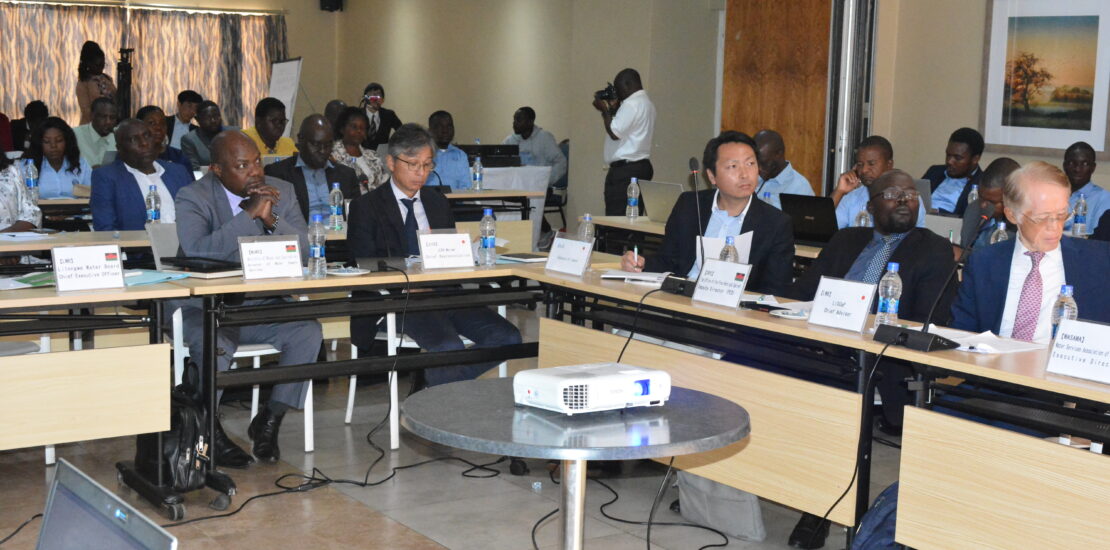
On Wednesday, Lilongwe Water Board in partnership with Japan International Cooperation Agency (JICA), held the 9th Joint Coordinating Committee (JCC) meeting in Lilongwe, where updates on non-revenue water reduction were shared by all the country’s water boards.
Speaking during the meeting, the Director of Water Supply Services in the Ministry of Water and Sanitation, Prince Mleta hailed LWB for the progress that has been made in the past six months under the Project for Strengthening the Capacity of Non-Revenue Water Reduction for Lilongwe Water Board (LiSCaP). He also applauded JICA and LWB for consistently organizing the JCC meetings, which are aimed at discussing and sharing the outcomes and progress of the activities conducted under the project. Mleta also appealed to all the Water Boards to invest in sustainable supply systems, as this is key to achieving the Malawi 2063 agenda and the UN Sustainable Development Goals.
Non-revenue water (NRW) refers to water that has been produced and put into the distribution system but is lost before it reaches the customer, either through leaks, theft, or metering inaccuracies. NRW is one of the major problems that Lilongwe Water Board (LWB) is experiencing. High pipe leakage rates because of a high percentage of old distribution pipes, and the high occurrence of illegal connections (theft), are among the major causes of these high losses.
LWB Chief Executive Officer, Silli Mbewe, expressed gratitude to JICA for the continued technical support under the LiSCaP project. He further said the Board will continue to engage different stakeholders in ensuring the best methods are used in fighting against Non-Revenue Water. Mbewe then committed that the Board will ensure they utilize the knowledge shared through these platforms to improve the Board’s service delivery.
The meeting brought together representatives from the five water boards, the government and JICA. LWB currently loses about 37% of the water that it produces. The goal for the Liscap project is to reduce the water losses to 28% by 2025.